
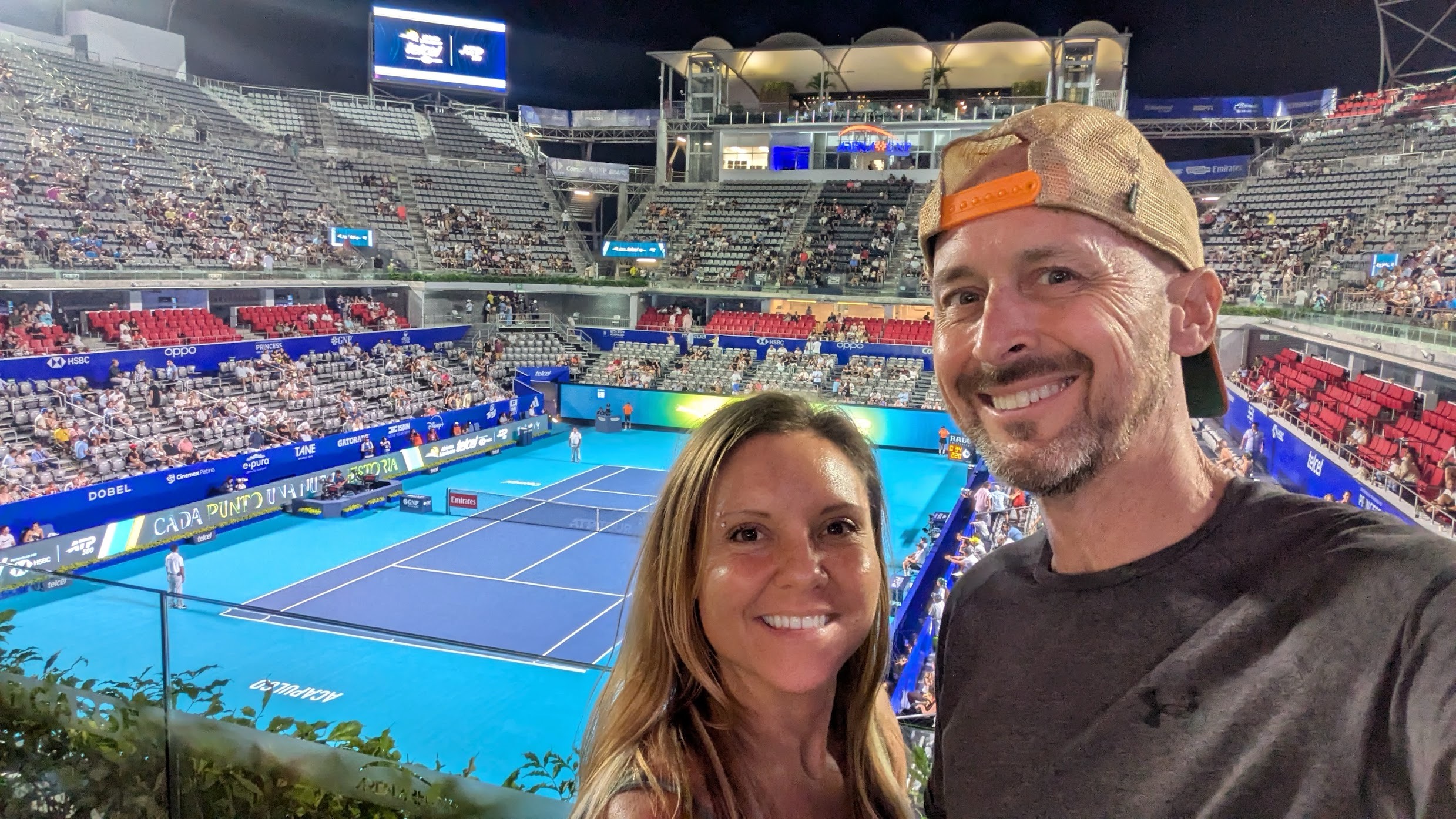
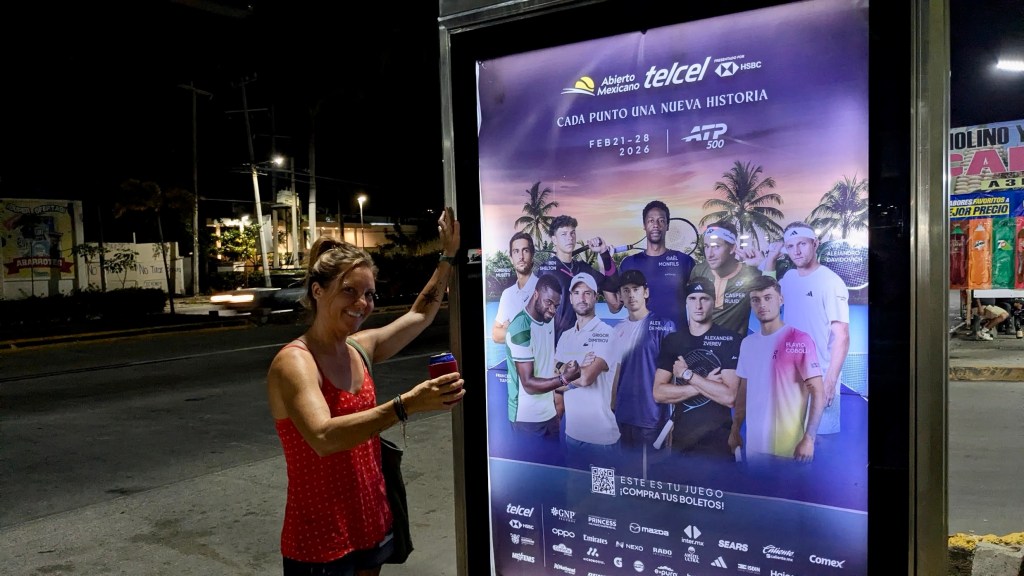
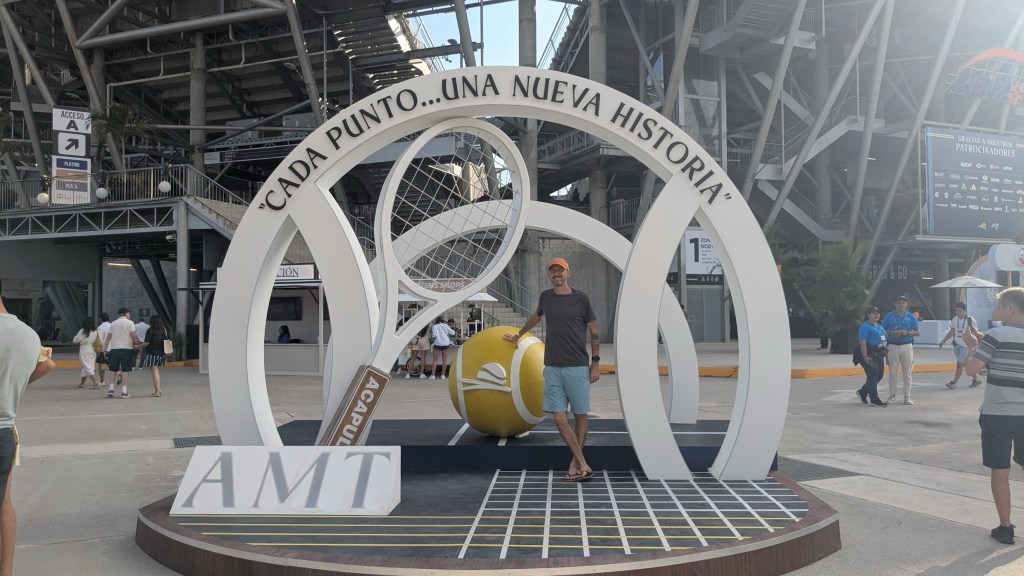
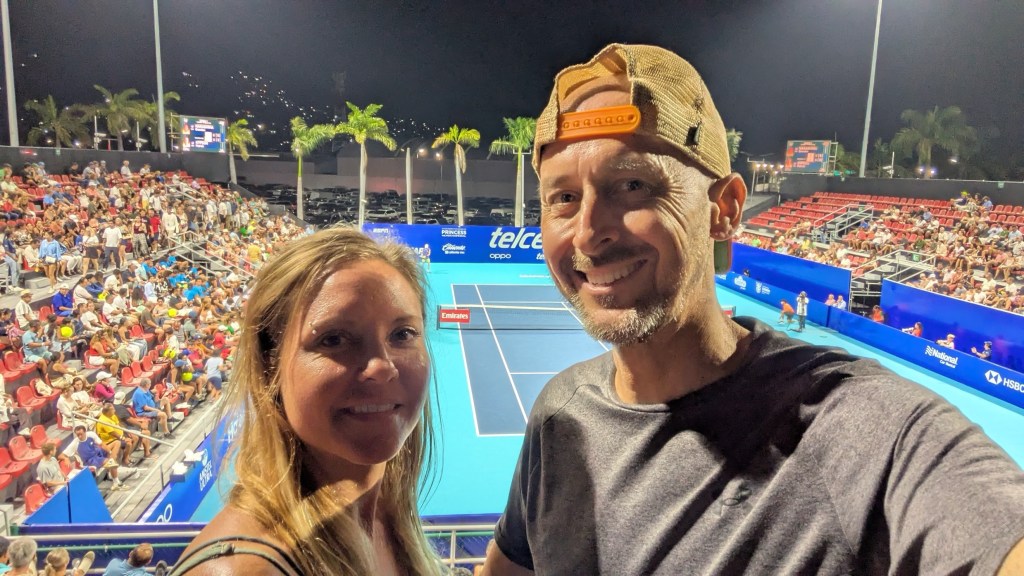
This year Ali and I made a semi–last-minute decision to drive down to Acapulco for the annual Abierto Mexicano Telcel, an ATP 500 event held in the Diamante area of the city.
From Zihuatanejo, the trip is about 250 km (155 miles) and takes roughly four hours, including about 250 pesos in toll fees. We had trouble finding detailed information online about how the tournament works, so we took good notes during our visit and are sharing them here for anyone considering attending.
Tournament Format
The Mexican Open takes place every year over eight days in late February. The first two days are qualifying rounds, while the official tournament runs Monday through Saturday.
The draw includes:
- 32 men’s singles players
- 16 men’s doubles teams
We attended the Wednesday session, which featured four doubles matches and eight singles matches played across four courts.
The tournament grounds open at 4:00 pm, with the first matches starting at 6:00 pm.
Buying Tickets
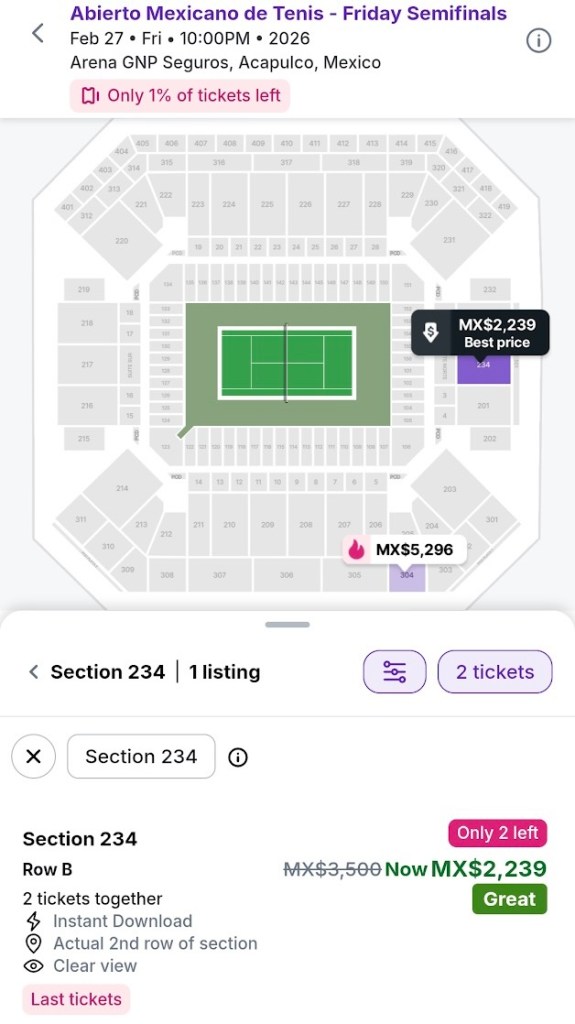
We purchased two tickets through StubHub a couple of days before the event for 5,700 pesos (about $315 USD).
My Chase Sapphire Reserve credit card offers a $150 StubHub credit every six months, which brought our final ticket cost down to about $165 USD. Here is a link to apply to the Chase Sapphire Reserve, if you are interested in some of the many benefits it provides. It’s my favorite credit card.
https://www.referyourchasecard.com/19u/EMN7ASCA96
We also used points from the same card to book two nights in a local hotel.
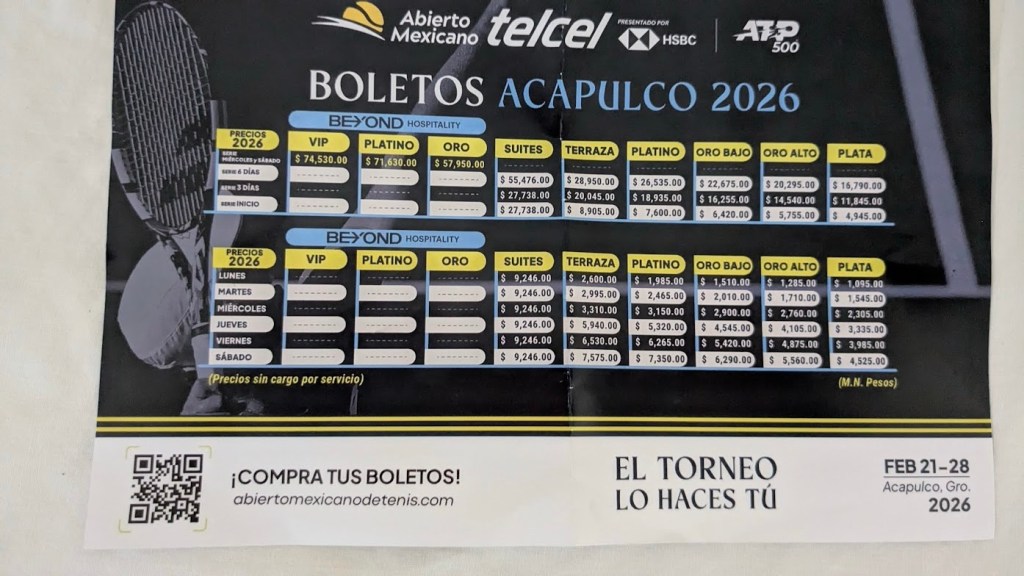
Tickets can also be purchased through Ticketmaster or directly at the venue. Options include single-day tickets, partial tournament passes, or full-week packages.
Typical pricing ranges from:
- Around 1,200 pesos for early-round matches (Monday)
- Up to 75,000 pesos for a full-week VIP pass
We also saw a few people offering tickets for sale outside the stadium, but it didn’t seem like a better deal. And now that everything is ticketless, I think it may be more of a hassle to try and figure out the logistics of paying for and transferring tickets.

Getting to the Stadium
There was plenty of parking available around the stadium for 250–300 pesos, but Ali and I opted for the combi bus, which cost just 15 pesos.
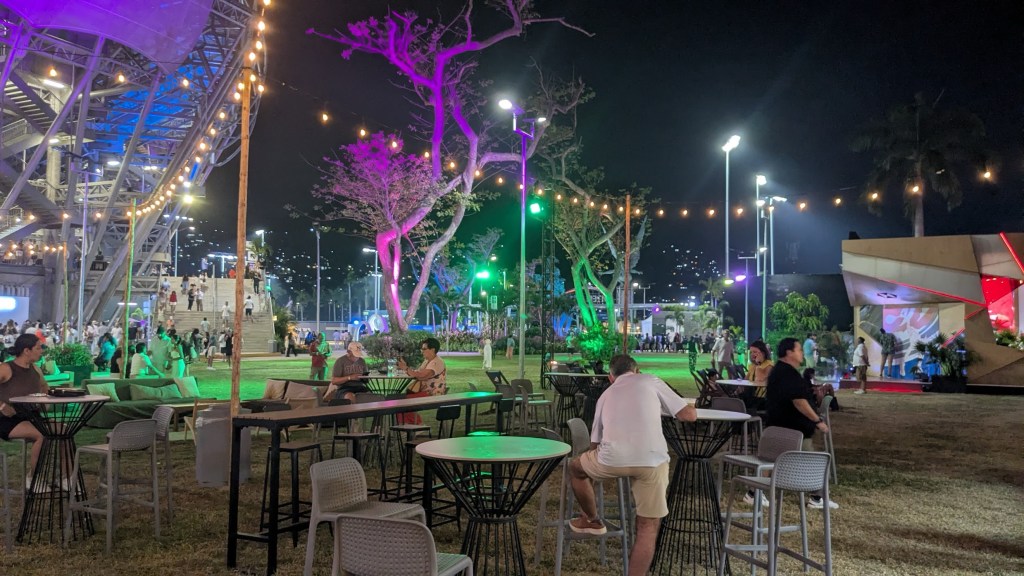
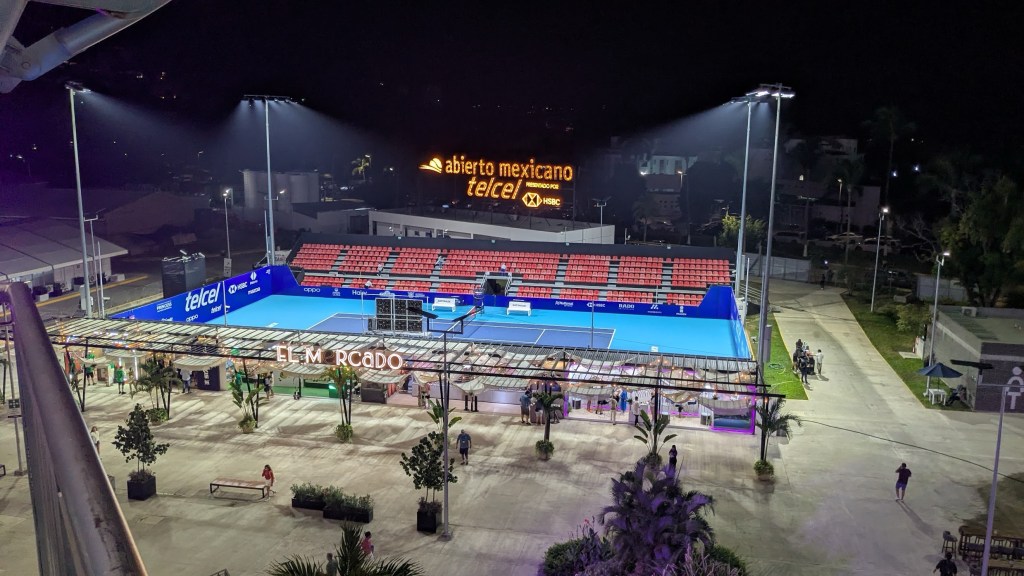
We arrived around 4:30 pm and were surprised by how large the venue was.
Your ticket grants access to the 10,000-seat main stadium, but it also allows entry to three additional courts, each with seating for around 2,500 spectators. You have an assigned seat in the main stadium, but the smaller courts are general admission seating.


The Cashless Payment System
Throughout the grounds there are “My Cashless” kiosks where you can load money onto a digital wristband using a credit card.
That wristband is then used to purchase:
- Food
- Drinks
- Merchandise
- Games and activities
Once we understood the system it worked well. Considering you can easily spend 8–9 hours at the venue, the cashless setup makes it convenient and eliminates the need to carry cash.
Food, Drinks, and Atmosphere
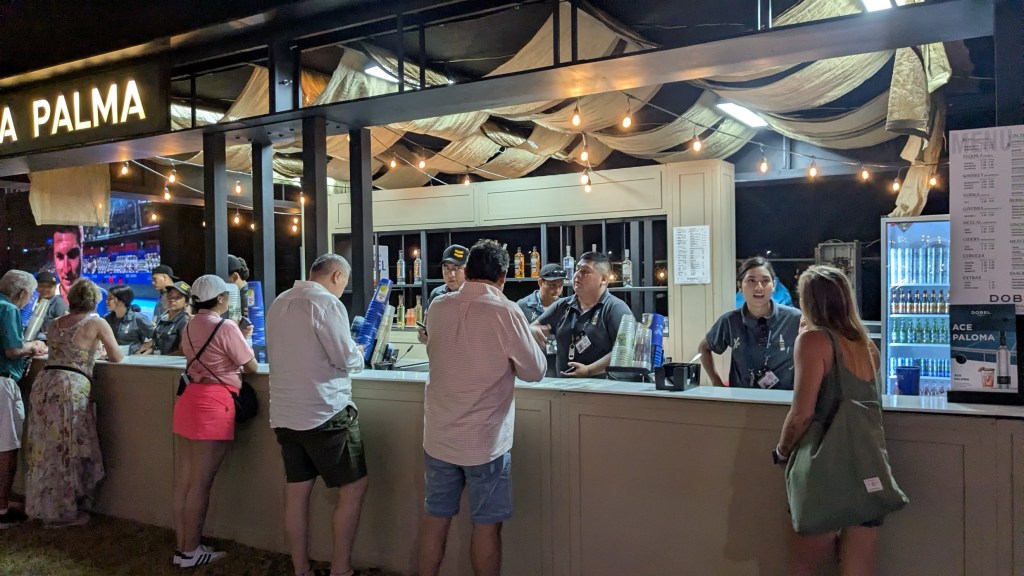
Like most sporting events, prices inside the tournament are not cheap.
A shared sandwich and five beers each cost us about 1,500 pesos (around $85 USD).
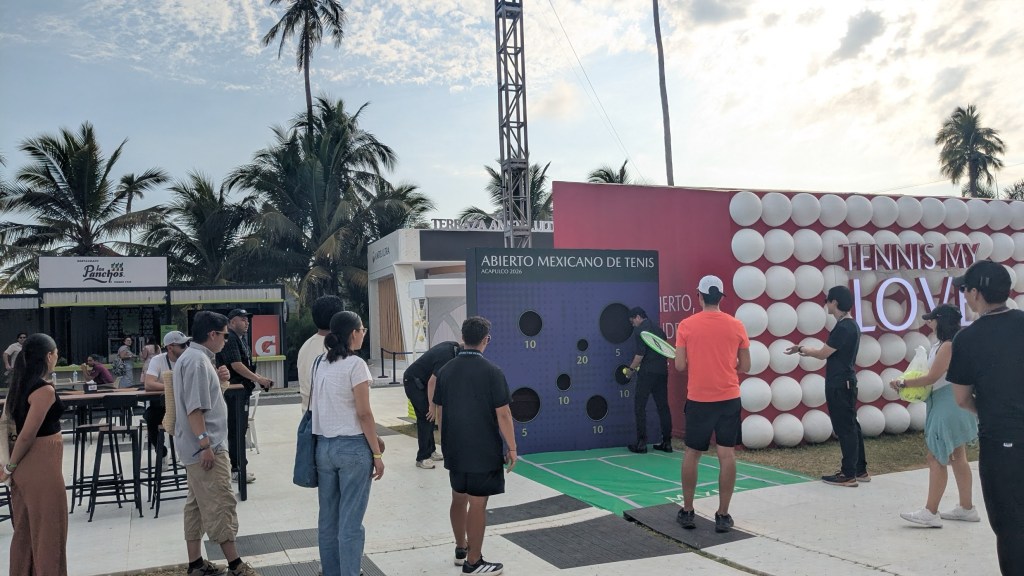
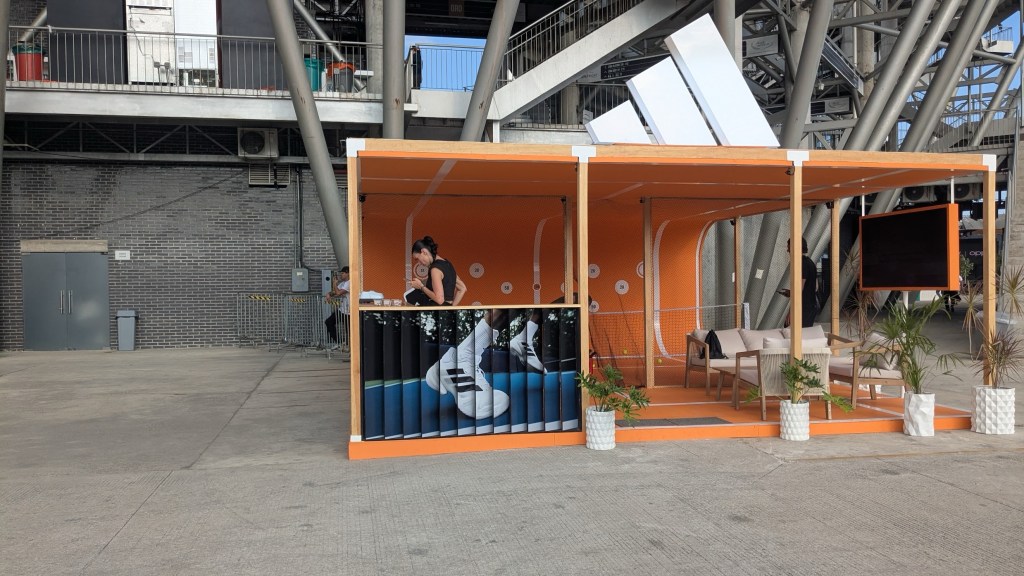
The grounds had a lively atmosphere with dozens of vendors, games, promotional booths, and prize giveaways.


Watching the Matches
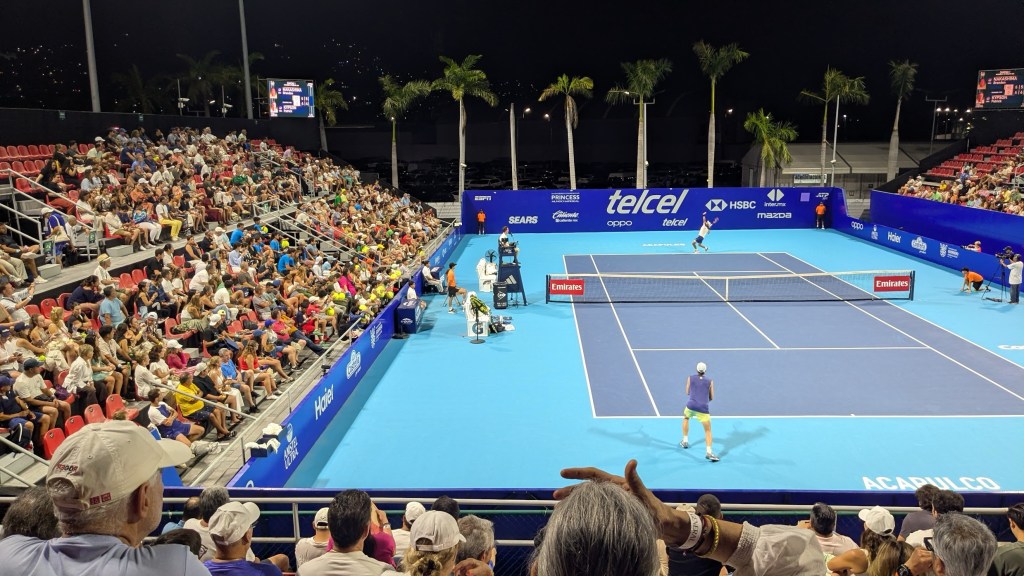
We watched the entire first match of the evening in the main stadium at 6:00 pm. It featured Alexander Zverev, who was ranked #4 in the world at the time.
He ended up losing the match in three sets, which made for an exciting start to the evening.
Later we learned that Zverev was also competing in doubles, and he and his partner ultimately won the doubles title.
After the first match, we figured out that the best strategy was to move between courts, catching the second half of multiple matches rather than staying in one place all night.
The smaller courts were noticeably warmer and less breezy, but being so close to the players made the experience worth it. We found the best seats to be lower and on the ends.
We stayed until almost 1:00 am before heading back to the hotel—and there was still one match going on.

The Level of Competition
Total prize money for the tournament was over $2.5 million USD, with:
- The singles champion earning around $500,000
- The winning doubles team earning just over $150,000
Every tennis fan knows the sport’s four biggest events: the Grand Slams—
- Australian Open
- French Open
- Wimbledon Championships
- US Open
These tournaments run for two weeks and men’s matches are played best of five sets.
Most other professional tournaments—including the Mexican Open—are best of three sets and typically last 8–10 days.
Just below the Grand Slams in prestige are the ATP Tour Masters 1000 events, of which there are nine each year.
Below those are the ATP 500 tournaments, including the event in Acapulco. The “500” refers to the number of ranking points awarded to the champion.
There are 16 ATP 500 events worldwide, and the Mexican Open is the only ATP 500 tournament held in Mexico. Mexico also hosts an ATP 250 event each year in Los Cabos.
In total, the tour includes about 30 ATP 250 tournaments annually, plus additional team events such as the Davis Cupand the United Cup.

Looking Ahead
On the women’s side, the WTA Tour hosts several events in Mexico each year. Three of the 16 WTA tournaments take place in the country annually.
Ali and I now have attending one of those tournaments on our to-do list.
Overall, the trip to Acapulco was a fantastic experience, and we’re hoping our schedule allows us to come back again next year.
